SCHEDULE A CONSULTATION
Table of Content:
Ageing comes with weakness and discomfort in doing physical activities for the majority of human beings. Only those who can maintain their muscle mass and muscle strength do not experience or experience less of these problems. As we grow older, the healing process of the body also slows down. Under these situations, a common problem that develops in seniors is a hernia. In a hernia, internal organs and fatty tissues push out from the weak spot in the muscle wall of the abdomen. This is common in the groin region, and such a hernia is called an inguinal hernia. It is quite common in males as compared to females.
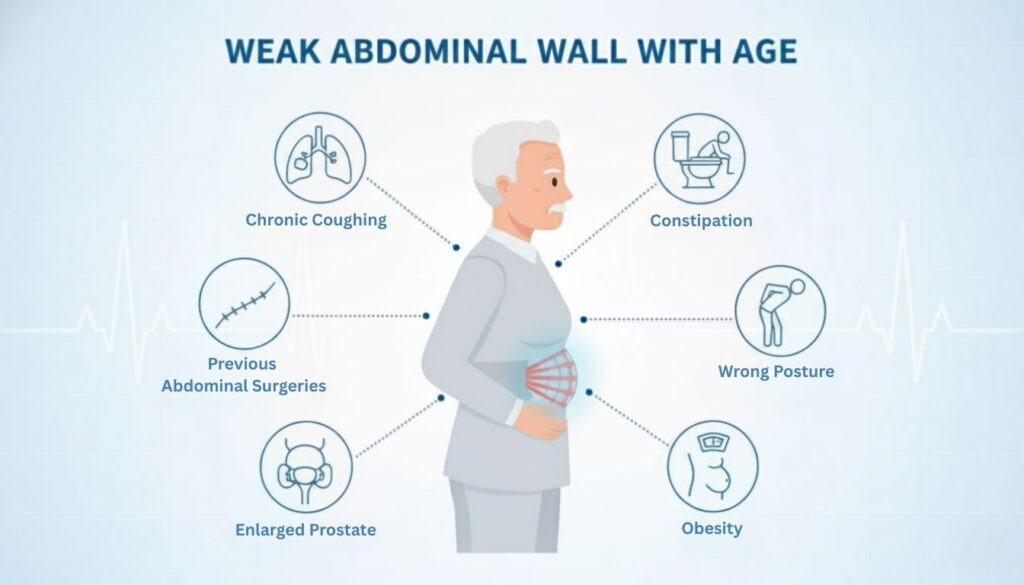
With age, the abdominal wall becomes weak, and if pressure on this wall increases, it can lead to a defect in the abdominal wall. Finally, from these defects, a hernia develops. In elderly patients, there are various kinds of medical problems and certain activities that increase pressure on the abdominal wall. Like,
These are the common reasons why elderly persons have a higher risk of developing a hernia.
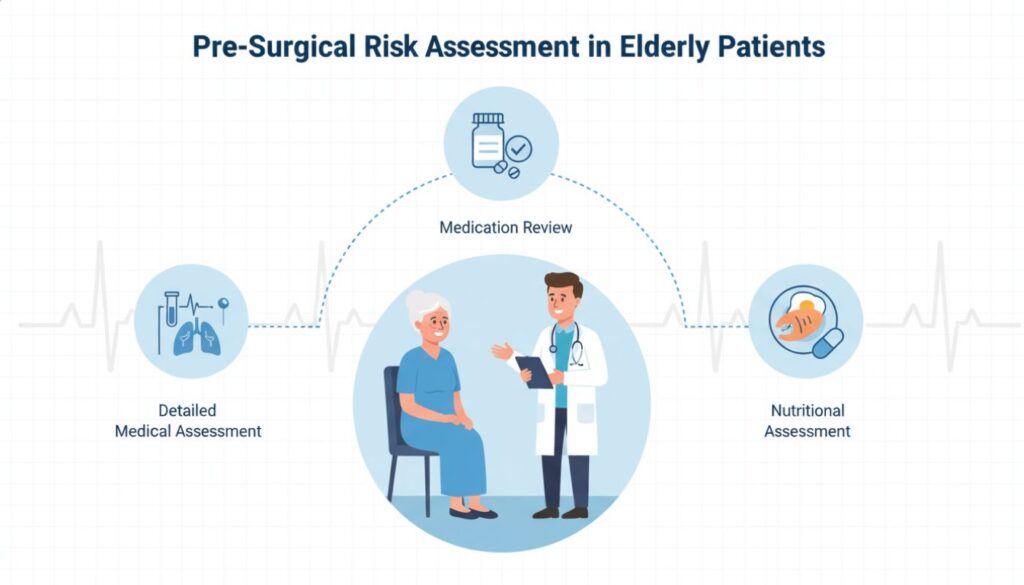
A thorough preoperative evaluation for elderly patients should extend beyond routine assessments to tackle age-related risks and existing chronic illnesses. This approach helps confirm surgical fitness, optimise comorbidities, and anticipate possible complications.
This includes blood tests, urine tests, cardiovascular evaluations, assessment of pulmonary functions, urological assessment, etc., as per the individual patient’s needs. This is essential to identify any risk factors that can complicate the surgery.
All current medications, including blood thinners, anti-inflammatory drugs, supplements, and diabetes medicines, are carefully reviewed and adjusted or temporarily stopped when needed to reduce bleeding and interaction risks before surgery.
Elderly patients are often malnourished, and this can slow down healing and increase the risk of infection. For smooth recovery, dietary advice to increase protein and essential vitamins intake will be helpful.
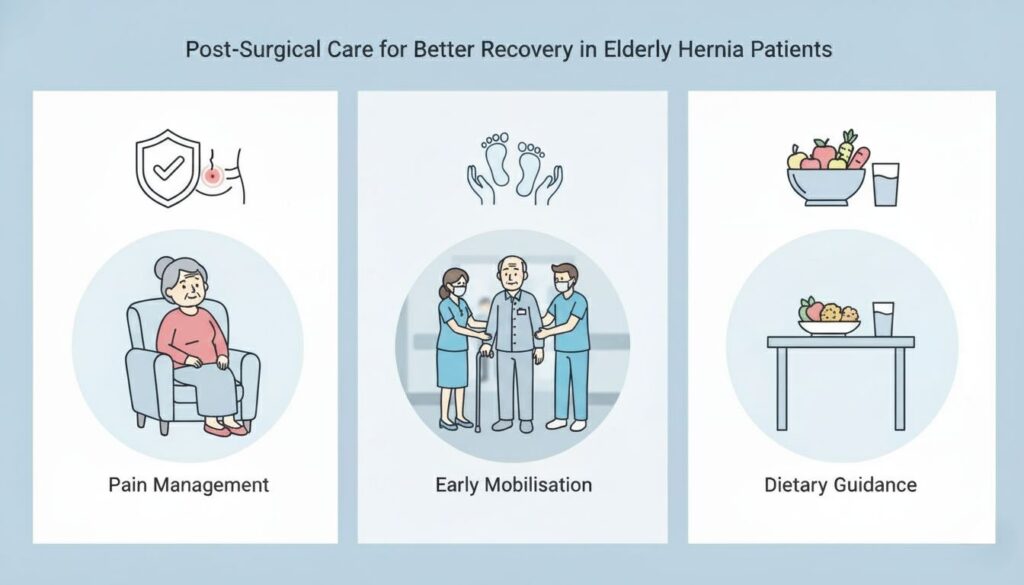
A tailored post-surgical care plan helps to make recovery complication-free, smooth, fast and pain-free.
As such, minimally invasive procedures like laparoscopy and robotics have greatly reduced the level of pain. Effective pain control is possible with appropriate pain killers, and our patients wake up after surgery without any tubes coming out of their noses or private parts. We also routinely give nerve blocks (Injections to numb your nerves to reduce pain) during the surgery, which reduces the post-surgery pain and need for painkillers. There is very minimal pain when patients wake up after surgery, they walk around in a few hours, and go to the washroom on their own. Most of them drink and eat on the same day and go home on the same day or the next.
As soon as a patient can walk, our team encourages the patient to walk gently. This will help to prevent clot formation and improve lung function. However, any strenuous activities should be avoided because they can lead to recurrence.
Constipation is one of the major factors to be addressed in priority. Taking a fibre-rich diet and good hydration helps to prevent it. Untreated constipation creates pressure on hernia sites and slows down healing.
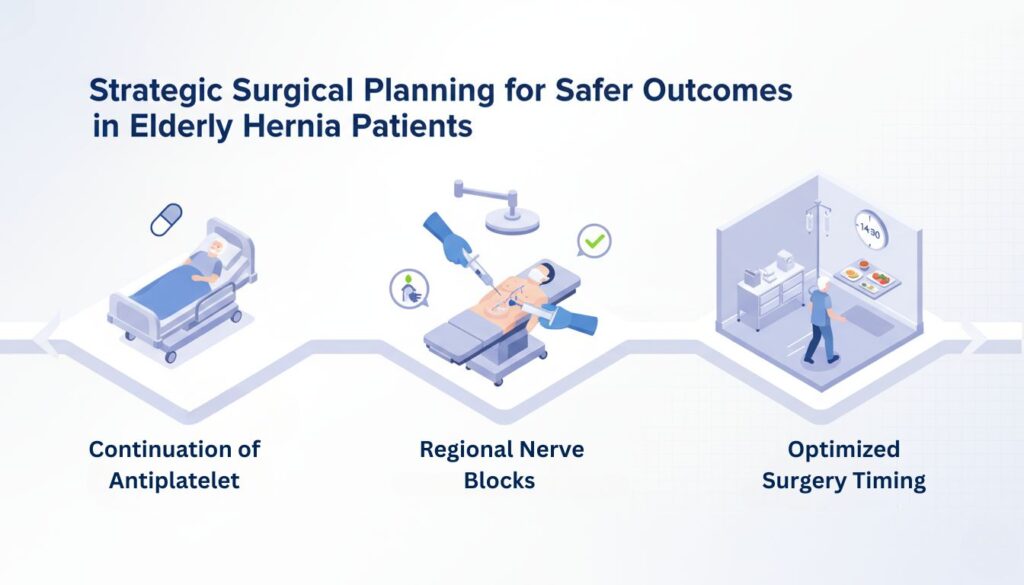
In addition to his vast experience in handling complicated hernia surgeries and his fine, meticulous skill, Dr Chirag Thakkar is strategising surgery in such a way that the entire procedure becomes smoother. A few of his strategies that work well in elderly patients are:
Dr Chirag can manage the surgery as a low-bleeding-risk procedure, and he prefers continuation of antiplatelet during surgery. This reduces the risk of any thrombotic event (heart attack, stroke, stent thrombosis).
We routinely give regional nerve blocks, even when the surgery is done in general anaesthesia (putting patients completely to sleep during surgery). These blocks deliver local anaesthesia to numb specific nerves, providing excellent pain relief, reducing the use of painkillers, and speeding recovery. Reduced pain, in turn, helps make the first day or two post-surgery much more comfortable. This also permits earlier mobilisation and potentially shorter hospital stays. Most of our patients are walking by themselves on the same day of surgery and are discharged the next day of surgery.
Generally, we prefer to schedule surgery in the afternoon. This permits a regular breakfast and dinner for elderly patients. This helps to maintain their normal energy level.
Your health journey is personal. Whether you’re dealing with a small or large hernia, the right medical approach can make all the difference. Dr Chirag’s approach focuses on patient education, precision, and compassionate care.
If you’re seeking the best hernia doctor in Ahmedabad, look for a specialist who combines medical expertise with a patient-first approach. Your path to recovery starts with understanding your options and working with a trusted medical professional. Get in touch with us.
You can book a video consultation with Dr Chirag Thakkar.
Call +91-8156078064 / +91-8469327630 or contact us to fix an appointment. Visit the ADROIT Centre for Digestive and Obesity Surgery for consultation.
Please subscribe to our YouTube channel to stay connected.
At ADROIT, we don’t just repair your hernia but aim at restoring the patient’s best possible activity level after surgery and giving our patients a very smooth and comfortable surgery experience. In the case of laparoscopic hernia surgery for complex and recurrent hernias, patients recover faster with minimal post-surgery pain and with the best functional outcome.
Dr Chirag Thakkar is a gastrointestinal surgeon. He has been carrying out Gastrointestinal and Weight loss/ Bariatric Surgery for the past 18 years. Surgery for GERD, hiatus hernia and obesity are his core areas of interest and expertise. For Acid reflux/ GERD treatment, ADROIT is one of the leading centres in India, providing all facilities under one roof. He also has vast experience in Laparoscopic surgery for gallstone removal.

Dr.Chirag Thakkar
Senior Gastrointestinal and Bariatric Surgeon
GERD and Esophageal Motility Expert
Hernia Surgery Specialist
Founder Director of ADROIT Centre for Digestive and Obesity Surgery
 Dr.Chirag Thakkar