Affordable Surgery with Best Care
Mediclaim and Cashless Facility Available
Affordable Surgery with Best Care
Mediclaim and Cashless Facility Available
No surgery, no scar and completely reversible. Same day discharge. Ideal for young females intending to lose 10-15 kgs.

Safe and reliable weight loss surgery. Will help you lose 70-80% of your excess weight.

Gold standard weight loss surgery. Ideal for those having Diabetes and cardiovascular problems.


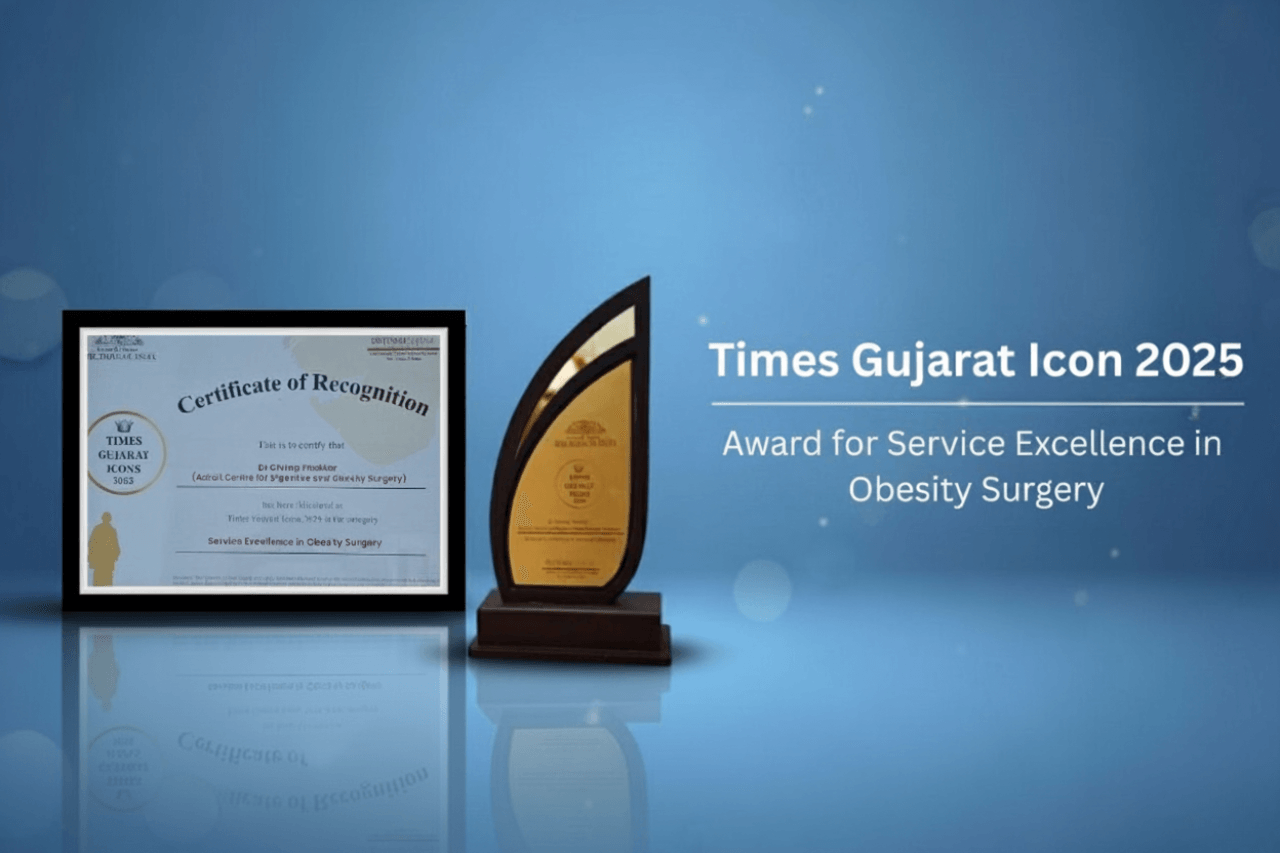
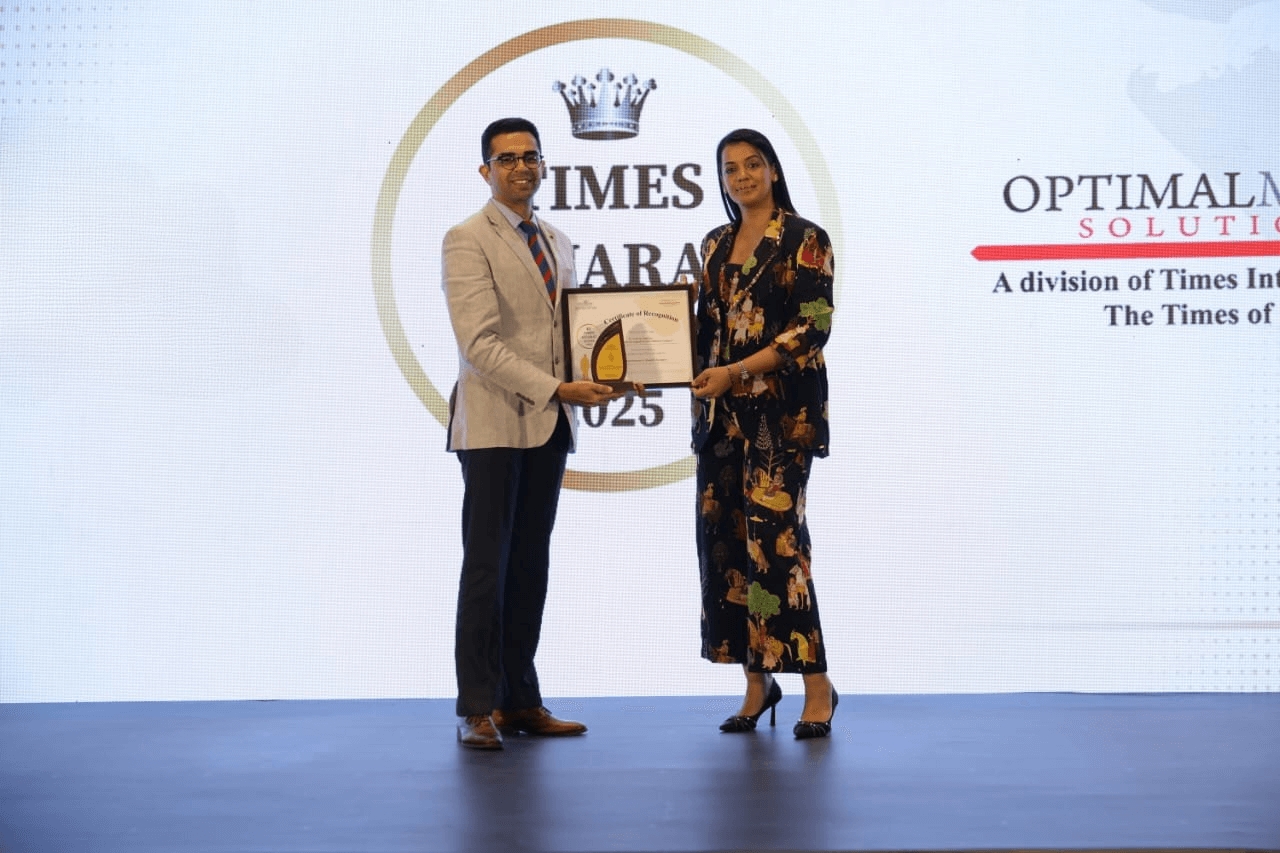
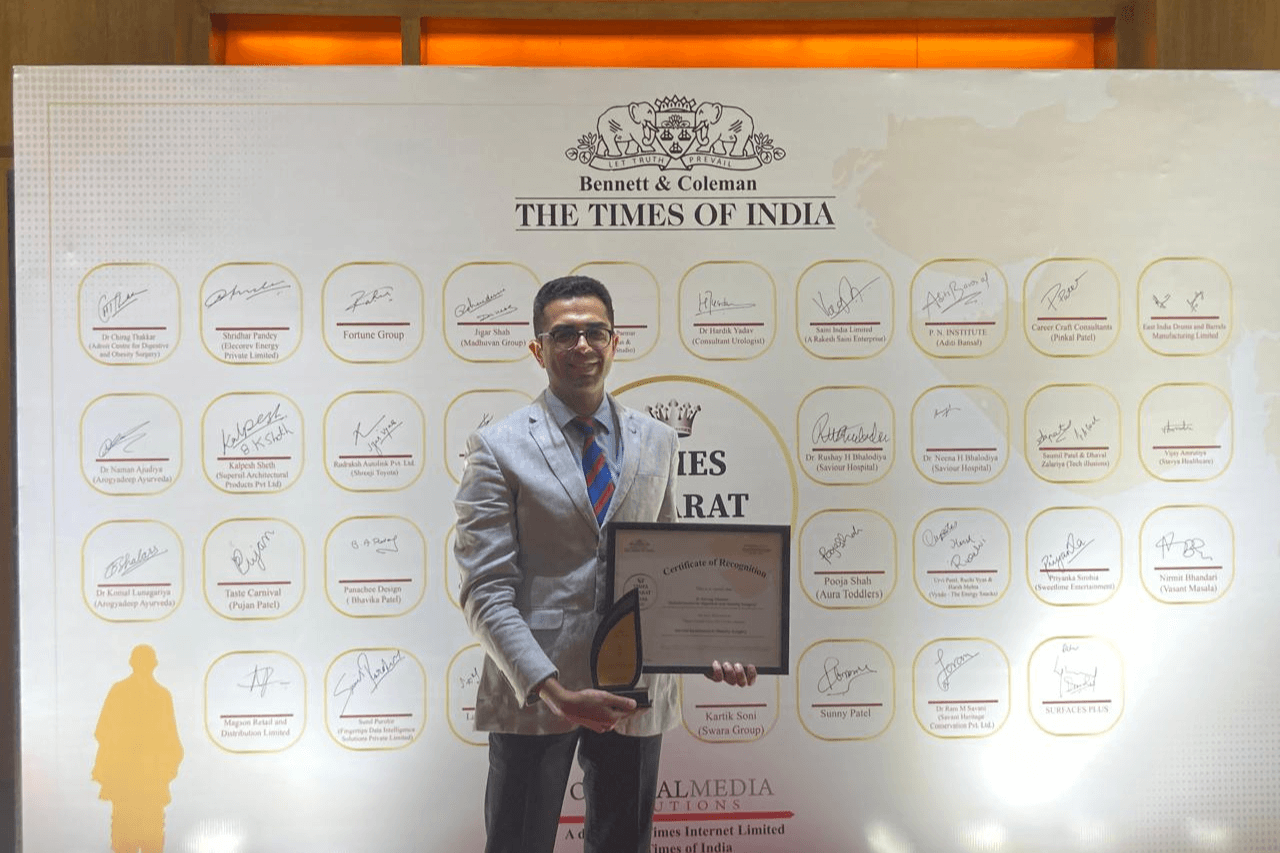
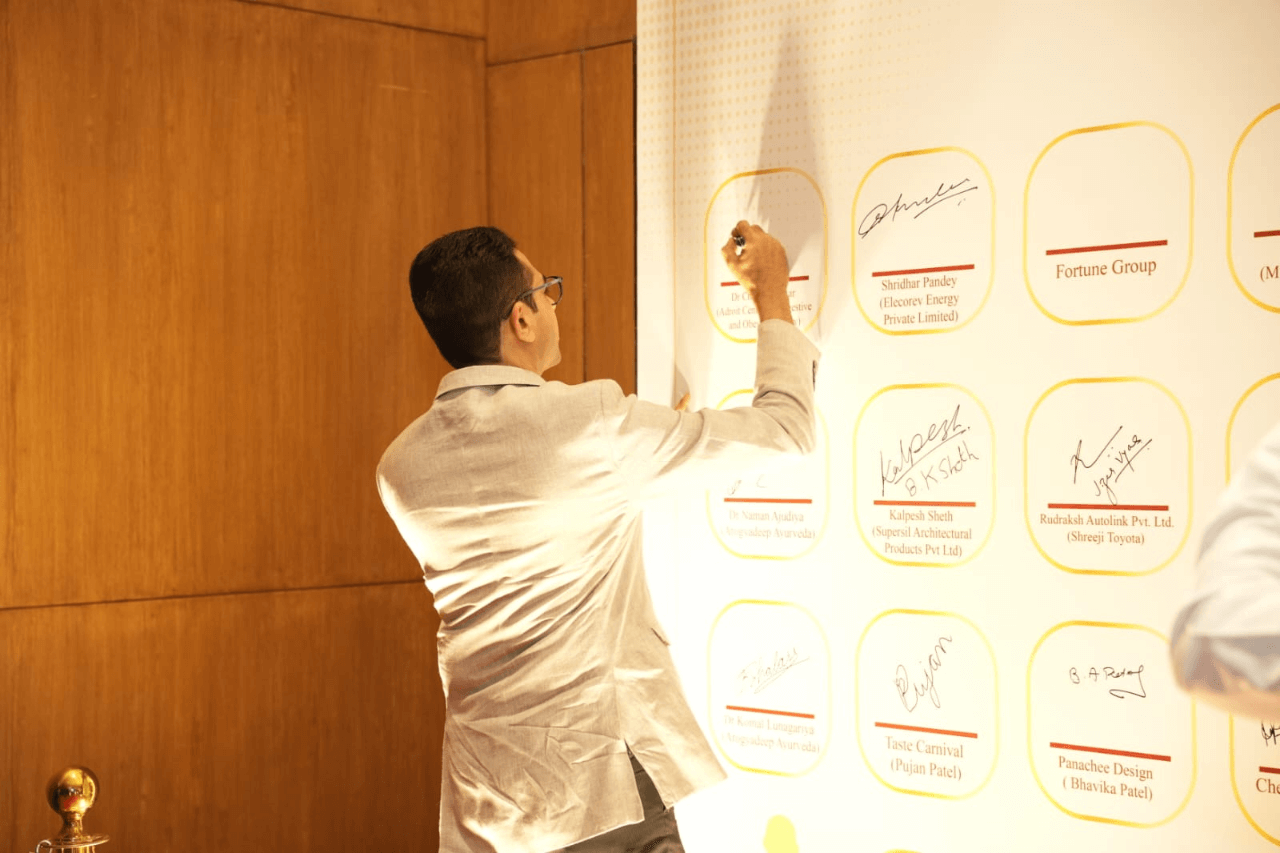
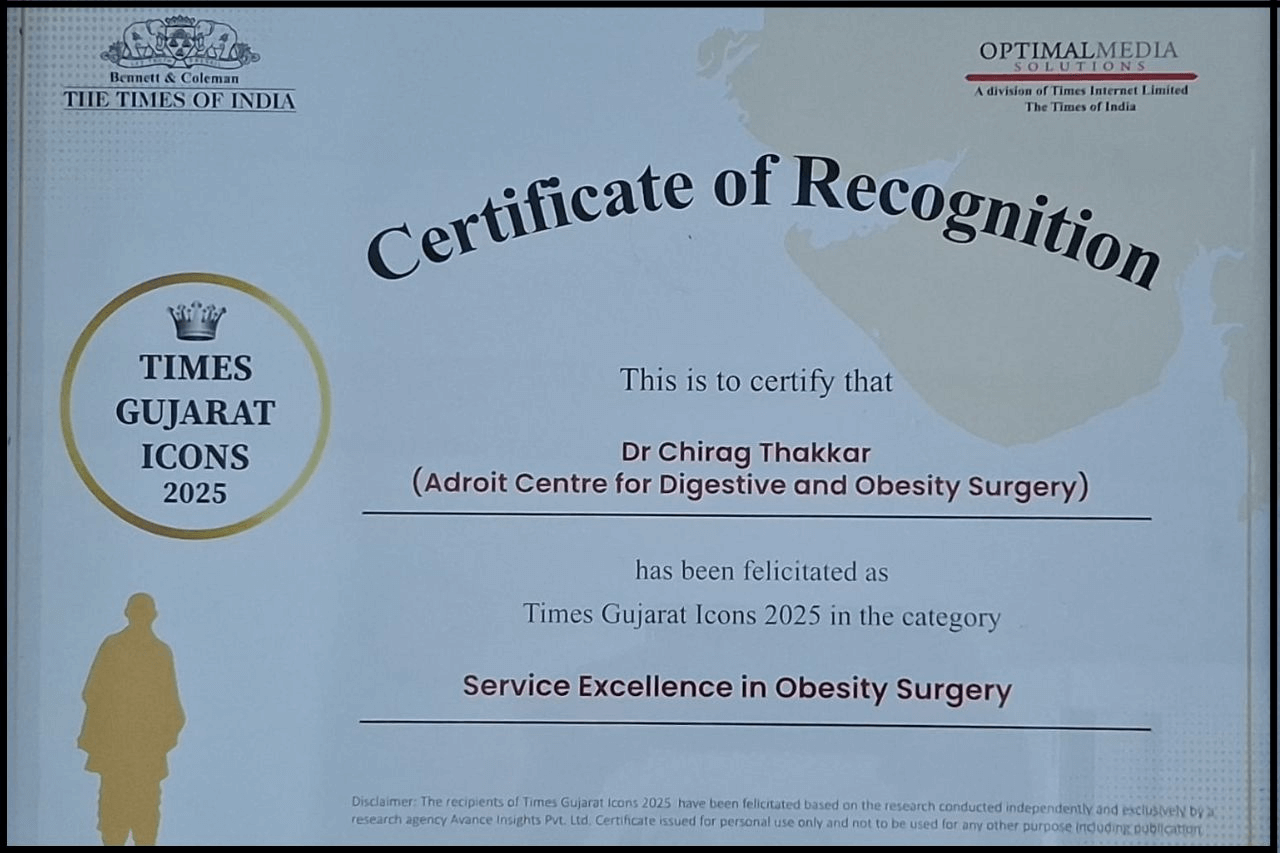
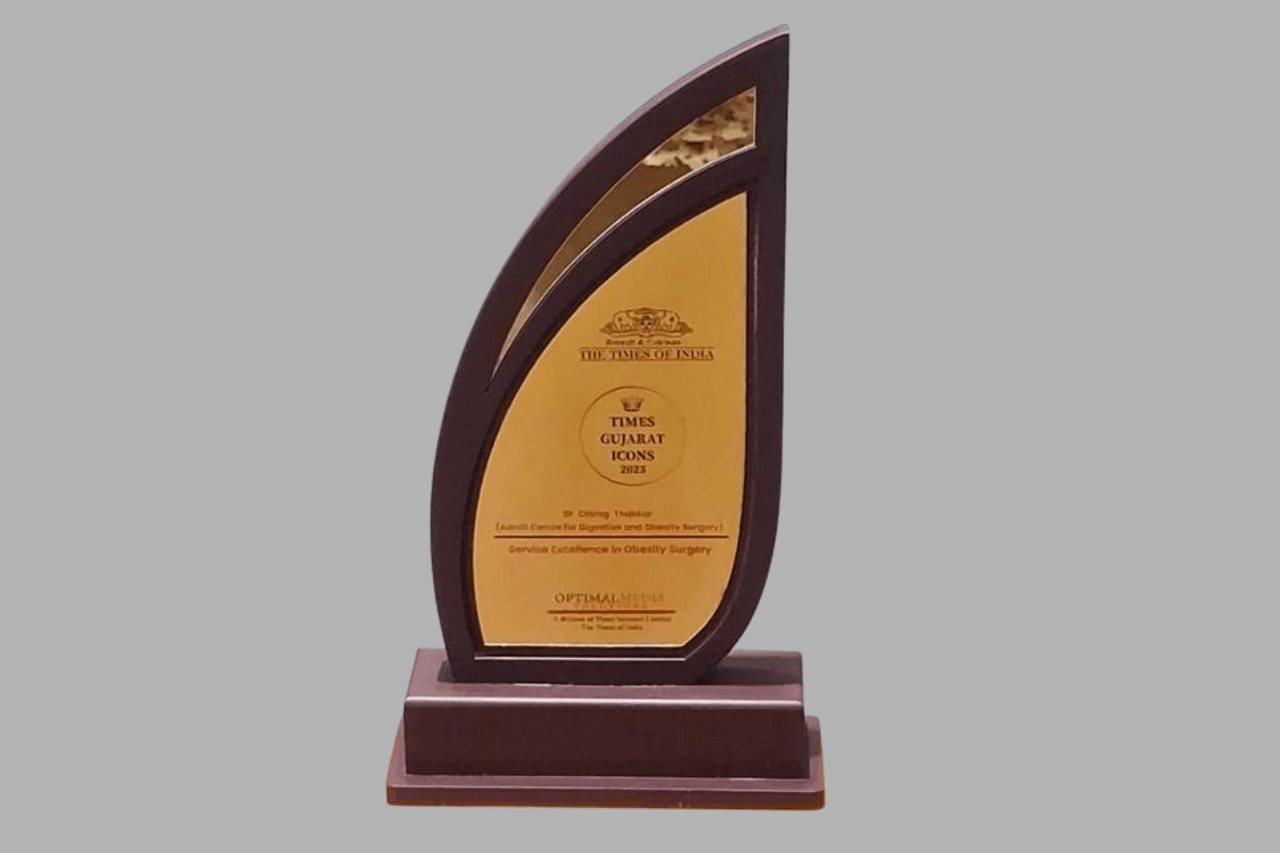
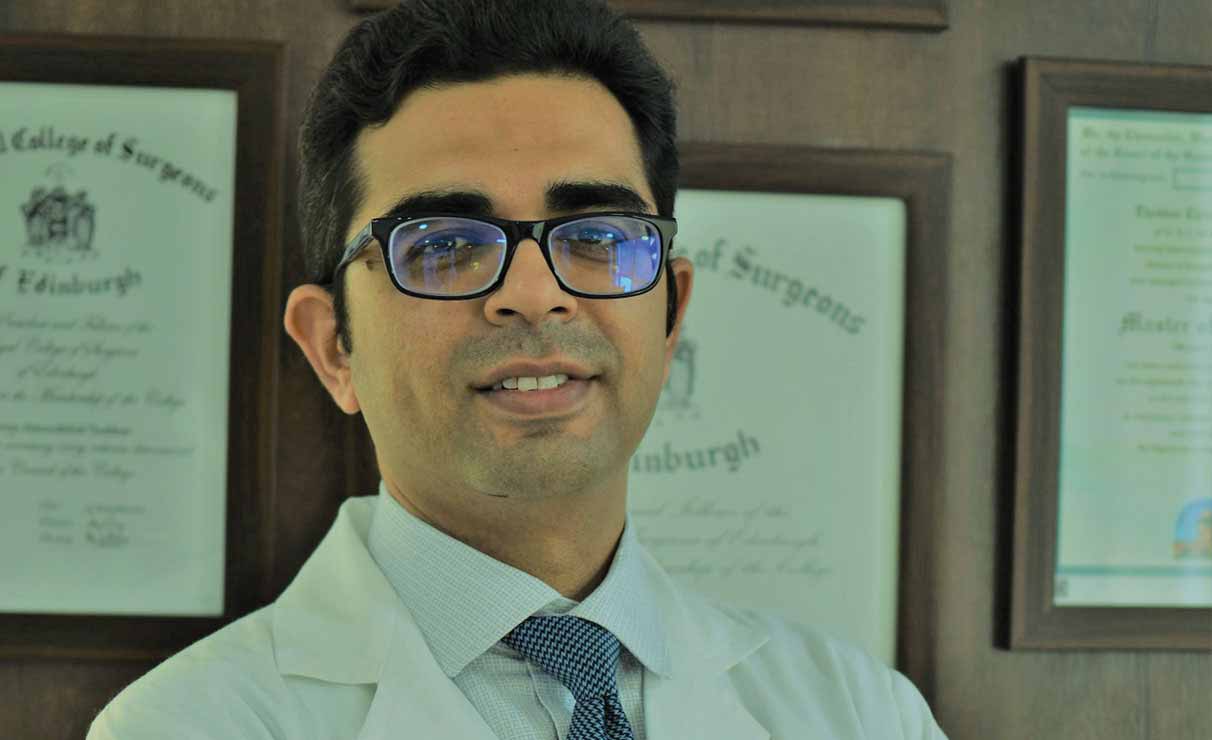
Dr Chirag Thakkar, founder and director of Adroit Centre for Digestive and Obesity Surgery, has been honoured with the Times Gujarat Icon 2025 award for Service Excellence in Obesity Surgery. This recognition celebrates his dedication to improving bariatric surgery, delivering exceptional outcomes, and setting higher standards in obesity care, along with providing outstanding post-surgical dietary, physiological, and psychological support.
We understand that Obesity is a disease that affects the body, mind, and soul. Obesity leads to a range of diseases, mental health problems, social, and economic problems and affects the quality of life. It also reduces life expectancy. To address all these problems and achieve sustainable weight loss and improved health, a comprehensive multidisciplinary approach is needed. We have a long and wide experience in all aspects of treatment for obesity and its related problems. With us, you can be sure you are in safe and expert hands.
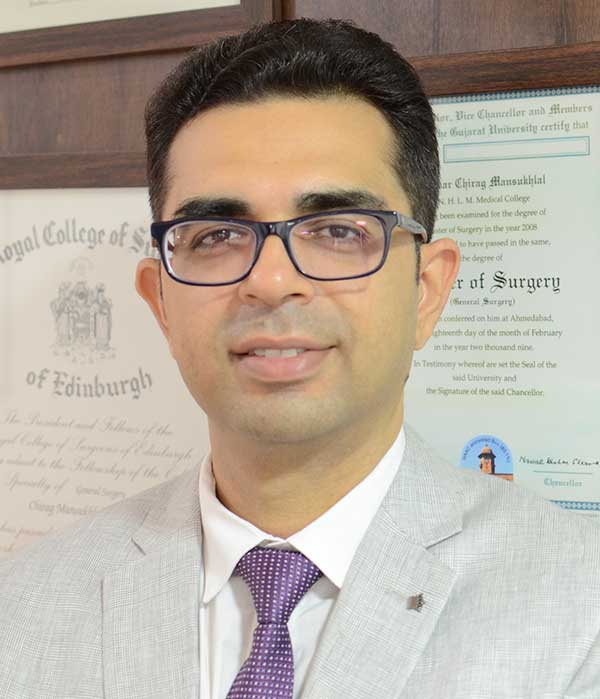
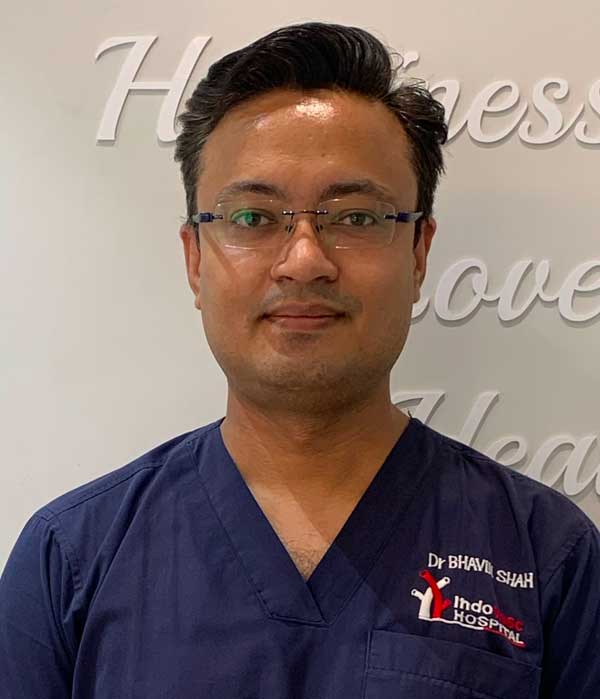


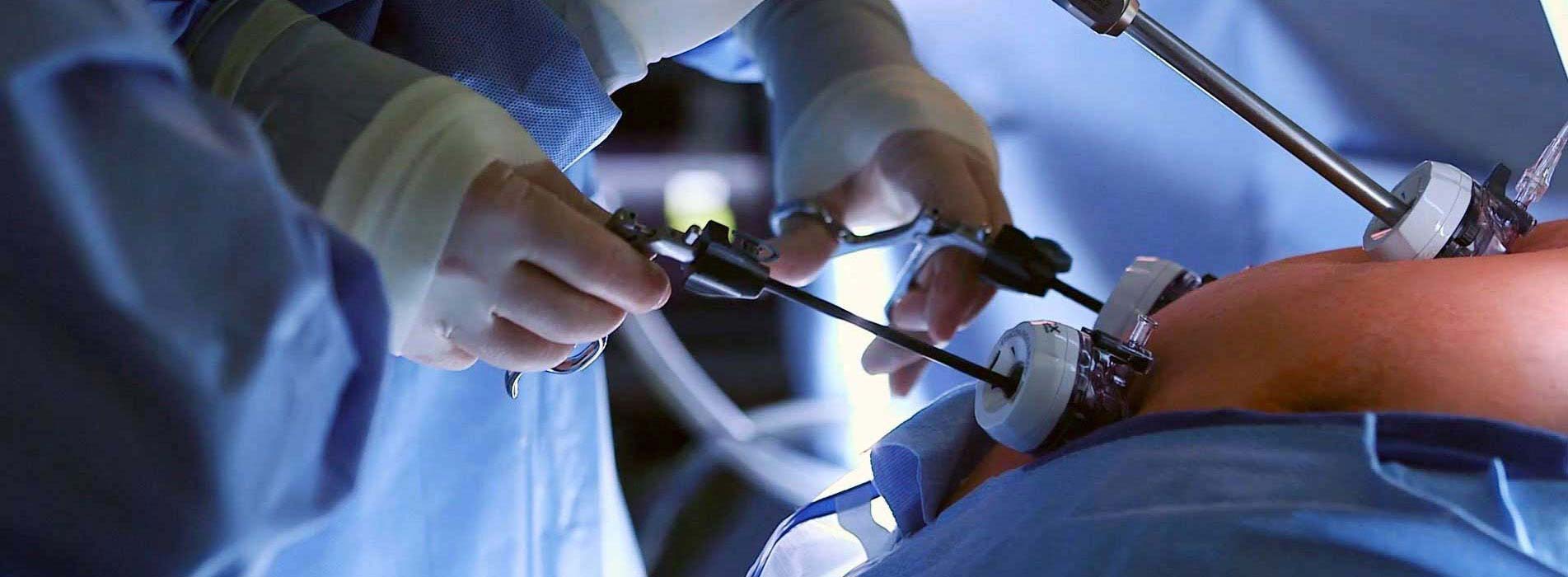
Obesity problems have become rampant in our society, closely following the western society. The medical problems arising due to obesity are also increasing at an alarming rate. The conditions include diabetes, hypertension, breathing problems like asthma and sleep apnoea, infertility, varicose veins, GERD, knee and back problems to name a few. Obesity has also been proven to be a common cause for a poor quality of life, decreased expectancy of life and various cancers. Thus obesity is a complex problem requiring special care and treatment. Our center provides all the special treatment options for obesity including obesity and body fat analysis, diet and lifestyle consultation, Endoscopic procedures like a gastric balloon and bariatric surgeries like a laparoscopic gastric sleeve, Roux-en-Y gastric bypass or RYGB and mini gastric bypass or MGB. Surgeries for the treatment of diabetes like sleeve gastrectomy with ileal interposition also called metabolic surgery are also done at our center. We have a dedicated team to address the different aspects of the care of a weight loss surgery patient.
I just got the Bariatric surgery 7 months back at Adroit Centre by Dr Chirag Thakkar and my life has changed upside down. I feel very much free. The obesity that was holding me back, is no more an issue. I have conquered all my limitations and that feels great. I am truly motivated to keep up my health now on wards and with Dr Chirag's guidance I am sure i will be able to do it. He did an excellent job, is very helpful and supportive. The post surgery care and follow up of Adroit clinic is excellent.
 Nirali Nimavat Gandhidham
Hello all, Dr Chirag Thakkar is the surgeon if you are thinking of weight loss surgery. I have undergone the sleeve surgery, its almost 7 months now and its fantastic. I have lost about 35 kgs and am still loosing. He says I will loose weight for total 18 months. I am already feeling amazing with all these weight loss. Everything seems changed. He is very good surgeon, very helpful and makes things quite smooth for us.
Fatima Aslam TanzaniaI have undergone a bypass surgery under Dr Chirag Thakkar and it was a very nice experience. I was too much scared to undergo surgery. Had been delaying my surgery for about 2 years. I was in touch with Dr Chirag Thakkar for few months. He sorted a lot of my queries and finally help me gain confidence to go for surgery. And I am happy that I underwent surgery. All my medical problems are almost cured. Its just 4 months of surgery and the benefits are loud and clear. The recovery was very fast and I can fly back in a week after surgery. All the follow up in online with Dr Chirag Thakkar. He is a fantastic surgeon. Am very thankful to him.
 Mohammed Abdul Rehman Kenya
Hello, life is great after bariatric surgery. Dr Chirag is really great. He helped me in all the stages of my weight loss. Started from my making decision for surgery, preparation of surgery, during surgery and now after surgery. It’s a long process and he is there to help me at all the stages. I have lost 26 kgs in 6 monhts after bypass surgery. There are a few small problem with all the change that is occurring. But the final result is amazing. If you fall in the catergory of morbid obesity and are thinking of surgery, Go for it. It will change your life. For any queries go and talk to Dr Chirag, he will sort out your issues. He is a real angel for me.
Preeti Dantani AhmedabadI am thankful to Dr Chirag for the weight loss surgery. It seems he has given me a new life. In my opinion, Dr Chirag is the best doctor surgeon for obesity treatments.
Milan Patel I would like to thank Dr. Chirag for such determination and great sincerity in service. One of the best bariatric surgeon and friendly doctor in ahmedabad.
Lubna Shaikh I had consulted many doctors for my father. All suggested that go for bariatric surgery. After visitng Dr chirag, he suggested us a right treatment, and my father has managed to lose good amount of weight since the treatment
Ankil Chunara I am very thankful to Dr Chirag Thakkar of Ahmedabad. I was operated for weight loss surgery & my post-recovery has been great.
Akash Sitapara I give credit to Dr. Chirag & team, as they have truly been an enormous help in my weight loss journey. I underwent obesity surgery eight months ago and I am fully mobile and no other medical concerns. I have to thank them for the incredible treatment they gave.
Hiral pancholi My weight loss surgery was done by Dr. Chirag thakkar. He is best weight loss surgeon in Gujarat. He is very excellent doctor. Thank you Dr. Chirag thakkar.
Nitin Gohil Dr. Chirag thakkar is best weight loss surgeon in ahmedabad, gujarat. I had finest experience with him. Thank you so much.
Chirag Anavadiya